Take control of your Amazon profit

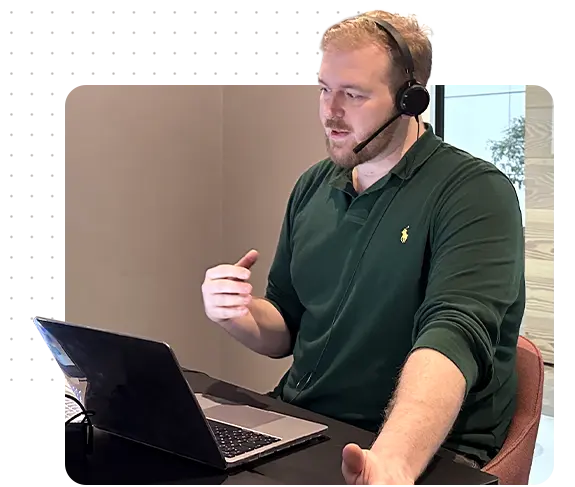
Aaron Baish
Senior Amazon Consultant
Bringing structure and visibility to Amazon Vendor (1P) costs, so teams can see what’s recoverable, what’s being charged, and what’s impacting margin.
✔ Reimbursement and chargeback recovery
✔ ASIN level margin, unit economics, and cost drivers
✔ Fees, shortages, and commercial terms that impact profit
Revenue Optimisation
Driving profitable growth across Amazon accounts while maintaining control over margin and performance.
✔ Account performance, availability, and forecasting
✔ Catalogue quality, content, and findability
✔ Advertising efficiency (ROAS) and ongoing account management
Who we work with
We are built for established Amazon accounts
Amazon 1P Vendor businesses
Hybrid 1P Vendor and 3P seller accounts
Internal teams responsible for Amazon
We are not set up for brands just getting started on Amazon.
Minumim £50K turnover per month





Our work



Our Partners






How we work

Low disruption
We work within existing Amazon processes and systems, without changing how your team operates day to day.

Clear scope
Engagements are defined around specific problem areas, with clear expectations on effort, access, and outcomes.

Commercial focus
Our work is driven by financial impact, control, and risk reduction, not activity for its own sake.
FAQ
Frequently asked questions
Cost FAQ's
Do you prevent future errors or just recover past ones?
Both. Recovery generates cash immediately (2-7% of revenue). Root cause analysis prevents 40-60% of recurring errors larger long-term benefit.
What happens to the unsuccessful disputes?
Unsuccessful disputes provide valuable intelligence: Amazon's specific rejection reasons, documentation gaps, and policy interpretations. This information enables process improvements preventing future issues. While we don't recover those specific amounts, the learning prevents significantly larger future losses.
What is the recovery timeframe?
Reimbursements typically occur over 3-9 months as disputes process through Amazon systems. Quick wins (obvious errors, good documentation) resolve in 4-8 weeks.
How much can we typically recover?
Average vendors recover 2-7% of gross revenue through systematic reimbursement programs. Recovery varies based on: charge types present, invoice age (older = harder), documentation quality, and operational complexity. Initial audits quantify specific recovery potential for your account before engagement.
What do you need to audit our account?
Access to Vendor Central for remittance review, PO data, and charge details. We require access only for the perpouse of the audit unless we move forward our access can be revoked. Most audits complete within 2-3 weeks identifying total recoverable amounts before you commit to recovery services. We are willing to sign NDA and your data will not be used for anything else.
What if we expand to more EU markets?
Each market adds complexity: additional VAT registrations, market-specific regulations, labeling requirements, and compliance obligations. However, proper initial structure makes expansion easier correct entity setup, HS codes, and documentation processes scale efficiently. Starting with scalable compliance infrastructure prevents costly restructuring later.
How often do import rules change?
Constantly. Post-Brexit created massive changes. EU VAT rules evolve regularly. Tariffs change with trade agreements. Product regulations update frequently. Compliance requires continuous monitoring what was compliant last year may not be today. Automated monitoring and proactive updates prevent expensive surprises.
Revenue FAQ's
Can you help if we're only operating one channel currently?
Absolutely. Many of our clients start with just 1P or 3P and engage us to evaluate whether adding the other channel would improve profitability. We conduct feasibility analysis, estimate the financial impact, and if beneficial manage the entire setup and transition process for the new channel.
How do you determine which products should be in which channel?
We conduct comprehensive unit economics analysis for each SKU, evaluating factors including: gross margin requirements, Amazon fee structures (1P vs 3P), advertising efficiency, operational complexity, inventory carrying costs, and strategic importance. Products with thin margins often benefit from 3P's pricing control, while high-volume commodities may perform better in 1P's automated system.
What's involved in transitioning products between channels?
Channel transitions require careful planning to maintain sales velocity and rankings. For 1P to 3P migrations, we coordinate inventory wind-down with Amazon, set up optimised Seller Central listings, implement FBA, and manage the Buy Box transition. For 3P to 1P transitions, we negotiate vendor terms, coordinate purchase order placement, and manage the listing transfer.
How complex is it to manage both Vendor Central and Seller Central?
Managing both channels involves significant operational complexity: separate inventory systems, different pricing structures, unique promotional mechanics, and distinct performance metrics. Our service handles this complexity for you, providing unified oversight and strategic coordination so you gain the benefits of both channels without the operational burden.
Will operating both channels create Buy Box conflicts?
Buy Box conflicts can occur if not managed strategically. Our hybrid management service implements pricing strategies, inventory positioning, and fulfillment optimisation to ensure you control the Buy Box while maintaining profitability across both channels.
When should I consider a hybrid 1P/3P model?
A hybrid model makes sense when you have a diverse product catalog with varying characteristics. High-velocity, lower-margin products often perform better in 1P (Vendor Central) where Amazon handles fulfillment at scale, while specialty products with higher margins may be more profitable in 3P (Seller Central) where you maintain pricing control. We analyse your specific catalog to provide recommendations.