Why some of your biggest Amazon problems start outside Amazon
Revenue Optimisation
Published on
Contributors
Herbie King
Share
Why some of your biggest Amazon problems start outside Amazon
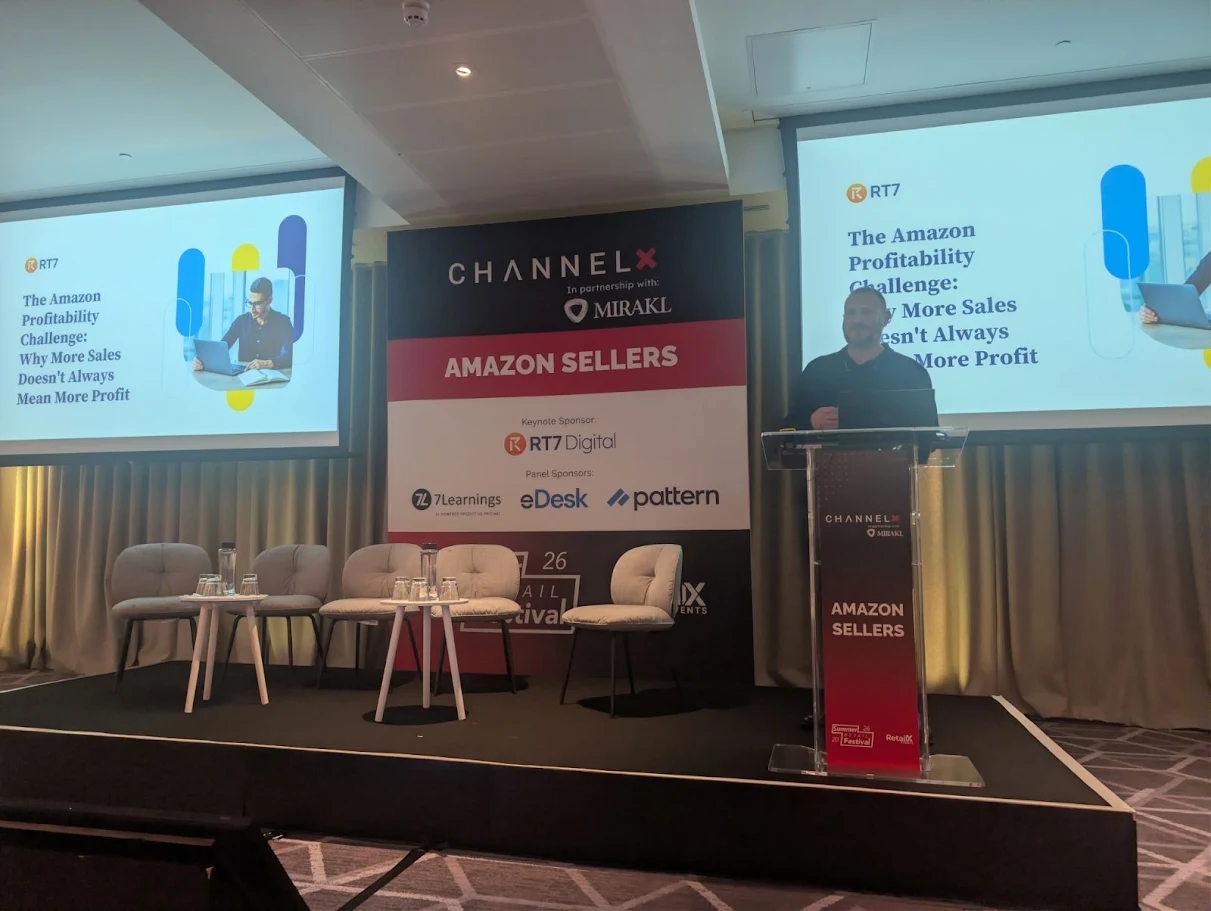
I was fortunate enough to speak at RetailX recently about Amazon profitability. Going into the presentation, I assumed we'd spend most of the session talking about improving Amazon profitability through PPC, listing optimisation and the things most people naturally associate with Amazon performance.
But as I started putting together examples from the team here at RT7, something became clear. The issues they kept coming back to didn't actually start on Amazon.
We have teams working directly with Amazon as Vendor, so the examples they shared came from real first hand (sometimes painful!) experience rather than theory.
What became clear very quickly is that many of the issues had little to do with Amazon itself. Things like pricing, distribution and supply chain…decisions made elsewhere in the business that ended up having a significant impact once products reached Amazon.
Where it started
One example the team shared with me involved one of the many fast-moving products we sell ourselves through Amazon Vendor: a bath sponge.
Not a particularly exciting product, but the problem it highlighted could just as easily have happened with a beauty product, an appliance or an expensive piece of tech.
The sponge had sold well for some time. But then something started to look off in the commercials.
The obvious places all looked fine. There wasn't anything unusual happening within the Amazon numbers, so we started digging a little deeper. It turned out the issue wasn't actually on Amazon at all.
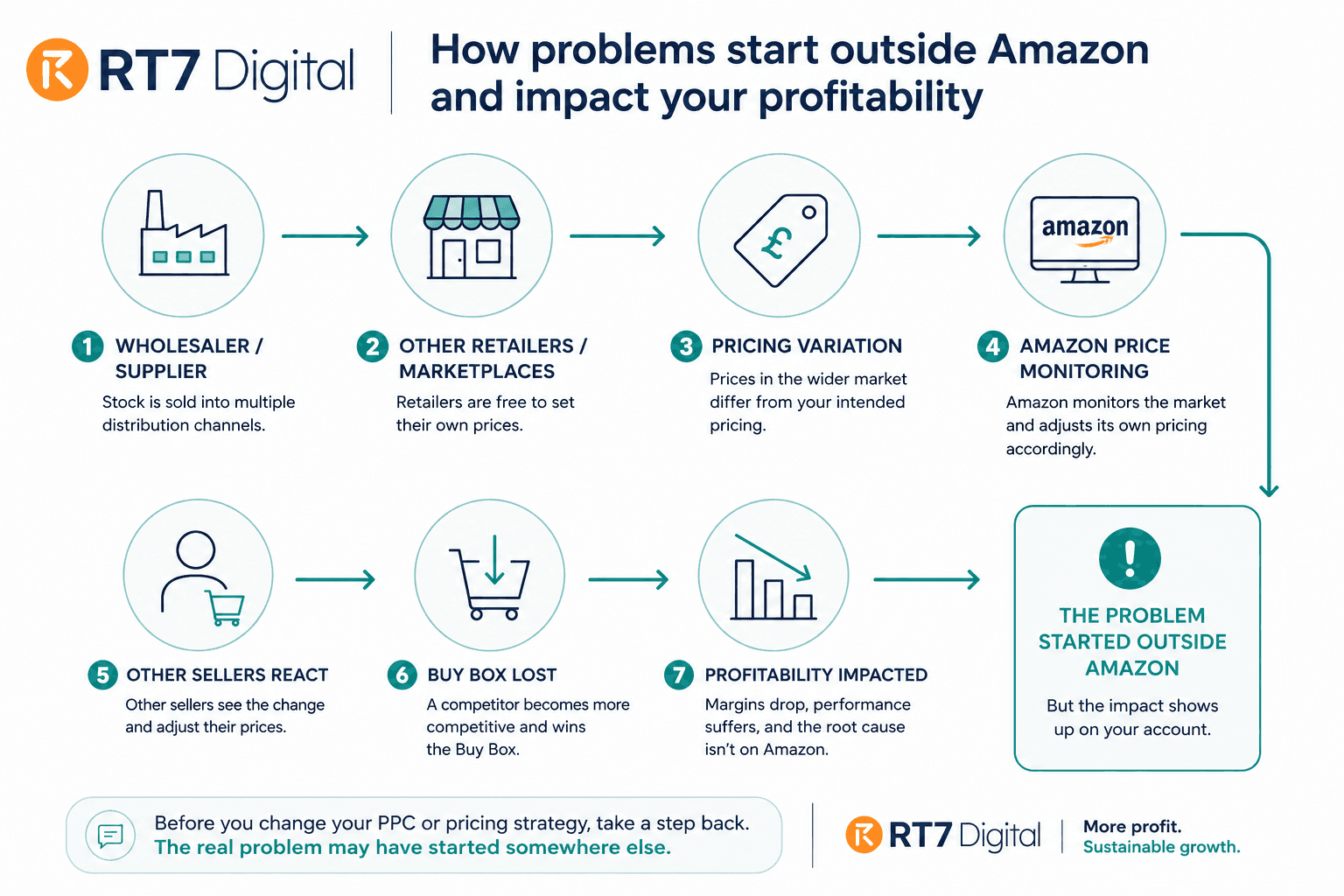
The wholesaler we bought the sponges from had sold stock into a number of different distribution channels, including Joybuy. Those retailers were then free to set their own prices. In this case, they priced the product higher than Amazon.
Amazon regularly monitors pricing across the wider market. It picked up those prices, adjusted accordingly and raised its own selling price. Before long, another seller on the listing was cheaper and winning the Buy Box.
On the face of it, it looked like an Amazon pricing issue. But it wasn't. The problem had started much earlier.
Once stock finds its way into channels you don't control, you also lose control over how it's priced. Amazon can only react to what it sees. If the market signals are wrong, the knock-on effects can be surprisingly difficult to unravel if you're only looking inside Amazon.
It's something we've seen more than once, and it's one of the reasons we spend so much time talking to clients about wholesale agreements and distribution control. Those conversations don't always feel like 'Amazon work', but they can have a significant impact on what happens once your products reach the platform.
The good news is that none of this is especially complicated to manage. It's more about having the right controls in place than finding a clever Amazon workaround.
The biggest one is keeping control of your distribution network. If you know where your products are being sold, you're far more likely to stay in control of pricing and, ultimately, your profitability.
That means having proper wholesale agreements in place and, just as importantly, enforcing them. We've seen businesses make short term decisions to hit a sales target or plug a cash flow gap, only to create much bigger commercial problems further down the line once that stock starts appearing in places it was never meant to.
If stock does leak into channels you don't control, act quickly. In some cases, we've even advised clients to buy the stock back. It sounds counterintuitive, but the cost of doing that can be far lower than the knock-on effect of Amazon reacting to pricing signals you never intended it to see.
When something changes on Amazon, it's easy to assume the answer will be found in Seller Central or Vendor Central. Sometimes it is.
But before changing your PPC, rewriting listings or questioning your pricing strategy, it's worth asking one simple question: Did the problem actually start on Amazon?
If any of this sounds familiar, or you've got Amazon issues that don't quite add up, we'd be happy to take a look. Sometimes it only takes a fresh pair of eyes to spot what's really driving the problem.
Get in touch with the team at RT7 if you'd like to chat.

