
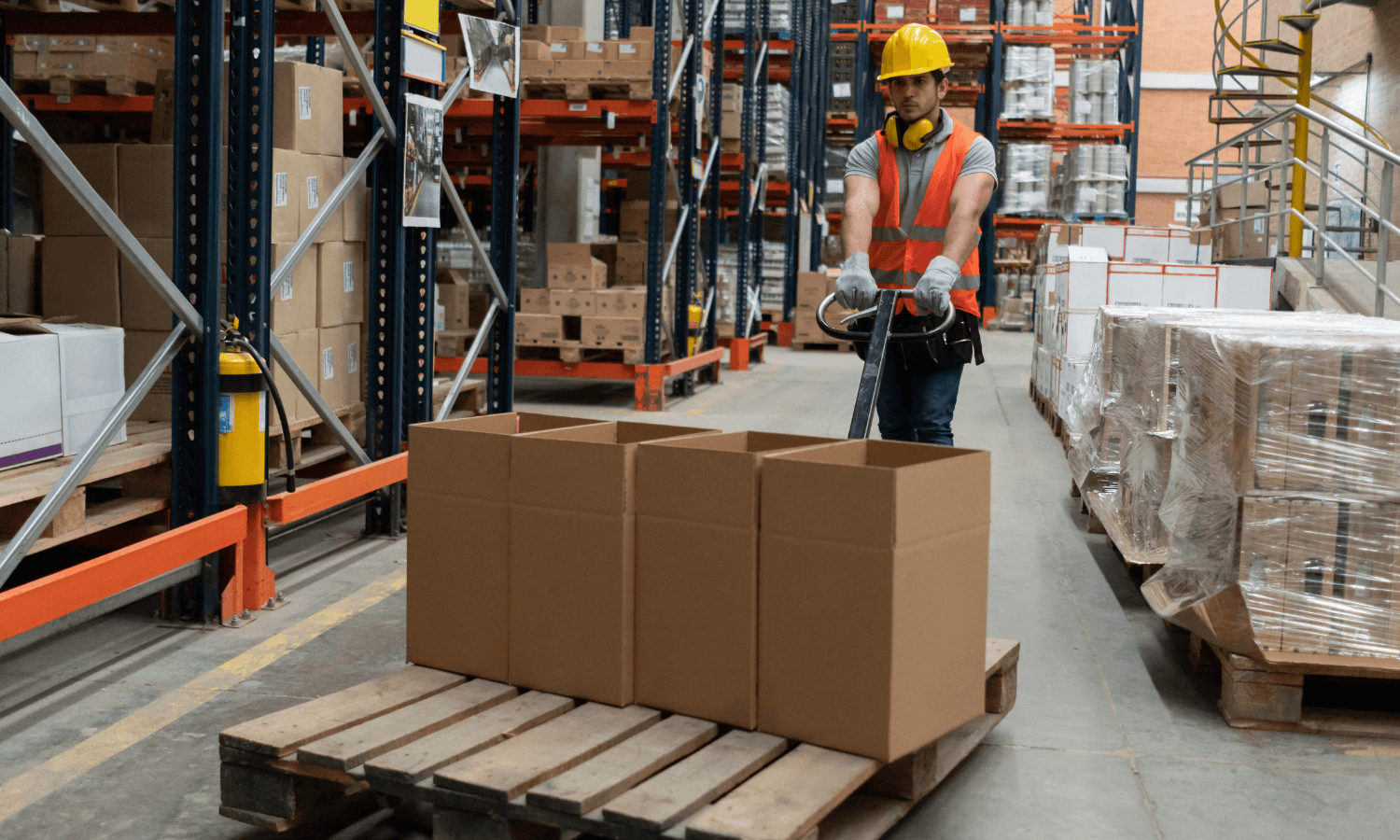
How RT7 Aligned Shipping Configurations With Unit Economics to Recover 7% in Margin
Overview
A wholesale brand was paying for its own growth in the wrong way. Rising sales volume was driving up per-unit shipping costs faster than revenue, because fulfillment configurations had never been aligned with the cost tiers the carriers actually rewarded. RT7 introduced a tiered shipping strategy that matched output to the most efficient transport tier at every volume — eliminating dead weight in cartons, setting clear triggers to consolidate into freight, and turning logistics from a variable cost center into a controlled, scalable framework. The result was an immediate margin lift and a model where higher volume produces better unit economics, not worse.
The Challenge
The brand's physical shipping configurations had drifted out of sync with its product unit economics. Reliance on individual carton fulfillment for high-volume orders meant the business was paying a premium for distribution at exactly the moment economies of scale should have been kicking in.
The Barrier: Disproportionate dead-weight costs and excessive per-unit shipping fees on high-volume orders.
The Risk: Cost-to-serve scaling faster than revenue, meaning growth threatened net profitability rather than enhanced it.
The Goal: Synchronize physical output with logistics price breaks, and identify the exact transition point where palletized freight overtakes parcel shipments on cost per unit.
Strategic Objectives
RT7 set three priorities to reset the brand's logistics economics:
Maximize Carton Density — eliminate wasted air and dead weight in every shipment to push more units through each fulfillment event.
Establish Volumetric Thresholds — define the precise volume at which switching from parcel to palletized freight becomes more profitable, removing guesswork from fulfillment decisions.
Protect Net Margins at Scale — ensure that increased order volume consistently lifts profitability rather than eroding it.
Strategic Execution & Implementation
The campaign was built on a tiered shipping logic: every order is configured to ride the most cost-effective transport tier available for its size, not the default one.
1. Density Optimization
Standard pack and carton configurations were re-engineered to maximize the units packed per cubic foot. Removing the wasted space in existing shipments captured immediate cost avoidance without changing carrier or contract.
2. Volume-Driven Consolidation Triggers
Clear thresholds were defined for when an order should shift from parcel-by-parcel handling to palletized freight. Instead of treating every order as a standard parcel by default, the system enforced a dynamic switch into freight logic once consolidation became cheaper per unit.
3. Tiered Fulfillment Model
The brand moved away from high-frequency, small-parcel handling toward a consolidated, high-efficiency framework. The model prioritized the lowest possible landed cost for every unit moved, and ensured that the existing 3PL infrastructure was being used at the tier where its pricing actually rewarded volume.
Implementation
Execution centered on a four-to-six week performance audit of existing listings, focusing on administrative alignment and warehouse protocol updates. Because the existing infrastructure was already capable of supporting the new model, results landed inside the first billing cycle. No new systems, contracts, or carrier changes were required.
The Results
The transition cut total shipping costs materially, with the steepest improvements on the highest-volume configurations. Two compounding gains drove the outcome: density optimization delivered an immediate margin lift, and the structural shift to bulk handling added a further foundational gain on top of it.
Margin uplift from density enhancements | +5% |
Margin gain from shift to bulk handling | +2% |
Combined immediate margin recovery | +7% |
Time to first measurable impact | First billing cycle |
Audit-to-implementation window | 4–6 weeks |
Conclusion & Future Outlook
The takeaway: a flat-rate shipping rate card only saves money when your physical configurations are built to use it properly. By enforcing density discipline and clear consolidation triggers, the brand turned logistics from a variable cost center that punished growth into a scalable framework that rewards it. Higher volume now consistently produces better cost per unit, not worse. RT7 will continue to refine the volumetric thresholds as the brand's product mix evolves, and apply the same tiered logic to new SKU launches from day one rather than after the cost erosion has already happened.